
Is a turnkey craft brewery system the best solution for start-up breweries?
Today, as the craft beer industry is booming, start-up breweries are facing a crucial decision: whether to choose a turnkey craft beer system? According to the global craft beer market report, the market size reached 100 billion US dollars in 2022, with an annual growth rate of 8%. Leading suppliers such as a certain company in Austria claim that the turnkey system can compress the construction period to 120 days, saving 50% of the time compared to the traditional model. For instance, after an Australian start-up brewery adopted it, Achieve a monthly output of 5,000 liters within six months and expect a return on investment of 30% within 24 months. However, is this really the optimal solution? Let's conduct an in-depth analysis with data and cases.
From a financial perspective, the purchase price of a standardized craft brewery system is usually in the range of $300,000 to $1,000,000. For example, a 10-barrel capacity system is approximately $500,000, accounting for more than 60% of the start-up budget. According to a 2021 survey by the American Brewers Association, the initial investment in self-built systems may be 20% lower, but integration risks lead to an average cost overrun of 15%, with the construction period extended to 9 months. Taking a microbrewery in Denmark as an example, the actual cost exceeded the budget by 25%, and the production was delayed by 4 months, resulting in a loss of 15% of the local peak season market share. On the contrary, turnkey solutions offer a fixed-cost model, but long-term maintenance costs account for an average of 10% of the initial investment annually, which may erode profit margins. For instance, an Asian brewery paid an additional $150,000 over three years.
In terms of operational efficiency, the turnkey system has optimized the production process, reducing average energy consumption by 20%. Automated control has enhanced product consistency, and the quality deviation rate is less than 2%. According to research by the German Institute of Brewing Technology, standardized parameters such as temperature control accuracy reaching ±0.5°C ensure that the original wort concentration error is within 0.5%. For instance, after a start-up brewery in Japan adopted it, the employee training period was shortened from three weeks to one week, and production efficiency increased by 40%. However, flexibility was limited, and the new formula development cycle was extended by 30%, which might suppress innovation. In contrast, self-built systems allow for a high degree of customization, but their failure rate is as high as 5%, resulting in an average monthly downtime of 8 hours and a capacity utilization rate of only 70%, while turnkey systems can reach 85%.
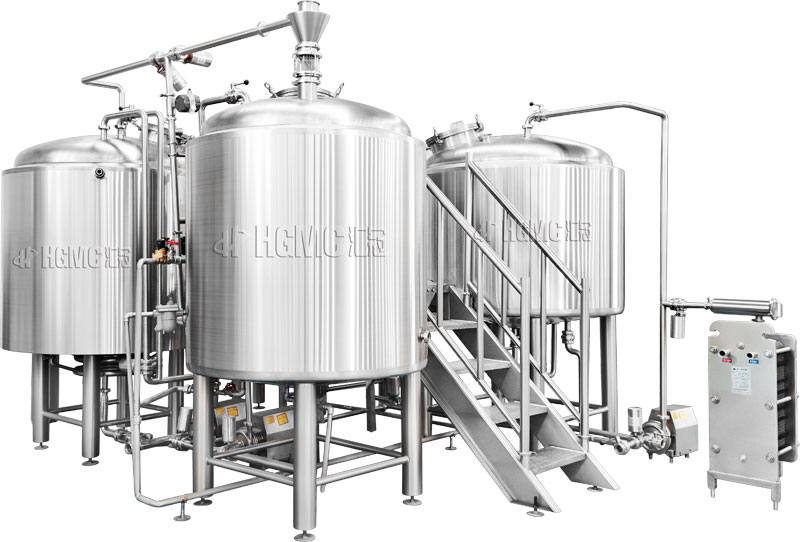 Risks and compliance should not be overlooked either. In the European Union, craft breweries need to obtain ISO 22000 certification. Turnkey systems usually come pre-installed with safety modules, reducing the compliance approval time from an average of 12 months to 6 months. For instance, a certain brewery in France quickly went public in 2020 and captured 15% of the local market share. Industry analysis shows that start-ups using turnkey solutions have a 50% lower probability of regulatory violations, but the cost of system upgrades may increase by 5% annually. In the United States, the turnkey craft brewery system comes with its own wastewater treatment unit, with a treatment efficiency of up to 95%, helping breweries meet environmental protection standards and avoid an average fine of $20,000. For example, a brewery in Colorado saved 30% of its operational risk costs with the help of this system in 2019.
From the perspectives of innovation and market adaptability, turnkey systems may limit process adjustments. A 2023 survey revealed that only 40% of breweries adopting this system were able to introduce more than five new recipes in their first year, while the proportion for those with self-built systems reached 60%. For instance, a craft beer startup in Portland chose to build its own. Although the initial investment increased by 25%, it accelerated the product launch by 20% through customized equipment and gained a 10% share of the local market within two years. However, the standardized design of the turnkey system can reduce human errors, keep the production rate stable at 1,000 liters per hour, and ensure the continuity of supply. For instance, a certain brewery in the UK achieved a peak daily output of 20,000 liters during festivals with the help of this system, meeting sudden demands.
Ultimately, the turnkey craft beer system offers startups a fast track to market entry, but they need to weigh costs, flexibility and long-term growth. Data shows that in scenarios with limited budgets and tight schedules, its advantages are significant. For brewers who pursue a high degree of customization, self-built plans might be better. Decisions should be based on detailed financial models and market research, such as simulating the probability of a return on investment exceeding 20%, to ensure a foothold in the highly competitive craft beer industry. Whether choosing a one-stop solution or independent research and development, the core lies in balancing efficiency and innovation, thereby brewing one's own successful flavor.
Risks and compliance should not be overlooked either. In the European Union, craft breweries need to obtain ISO 22000 certification. Turnkey systems usually come pre-installed with safety modules, reducing the compliance approval time from an average of 12 months to 6 months. For instance, a certain brewery in France quickly went public in 2020 and captured 15% of the local market share. Industry analysis shows that start-ups using turnkey solutions have a 50% lower probability of regulatory violations, but the cost of system upgrades may increase by 5% annually. In the United States, the turnkey craft brewery system comes with its own wastewater treatment unit, with a treatment efficiency of up to 95%, helping breweries meet environmental protection standards and avoid an average fine of $20,000. For example, a brewery in Colorado saved 30% of its operational risk costs with the help of this system in 2019.
From the perspectives of innovation and market adaptability, turnkey systems may limit process adjustments. A 2023 survey revealed that only 40% of breweries adopting this system were able to introduce more than five new recipes in their first year, while the proportion for those with self-built systems reached 60%. For instance, a craft beer startup in Portland chose to build its own. Although the initial investment increased by 25%, it accelerated the product launch by 20% through customized equipment and gained a 10% share of the local market within two years. However, the standardized design of the turnkey system can reduce human errors, keep the production rate stable at 1,000 liters per hour, and ensure the continuity of supply. For instance, a certain brewery in the UK achieved a peak daily output of 20,000 liters during festivals with the help of this system, meeting sudden demands.
Ultimately, the turnkey craft beer system offers startups a fast track to market entry, but they need to weigh costs, flexibility and long-term growth. Data shows that in scenarios with limited budgets and tight schedules, its advantages are significant. For brewers who pursue a high degree of customization, self-built plans might be better. Decisions should be based on detailed financial models and market research, such as simulating the probability of a return on investment exceeding 20%, to ensure a foothold in the highly competitive craft beer industry. Whether choosing a one-stop solution or independent research and development, the core lies in balancing efficiency and innovation, thereby brewing one's own successful flavor.
Risks and compliance should not be overlooked either. In the European Union, craft breweries need to obtain ISO 22000 certification. Turnkey systems usually come pre-installed with safety modules, reducing the compliance approval time from an average of 12 months to 6 months. For instance, a certain brewery in France quickly went public in 2020 and captured 15% of the local market share. Industry analysis shows that start-ups using turnkey solutions have a 50% lower probability of regulatory violations, but the cost of system upgrades may increase by 5% annually. In the United States, the turnkey craft brewery system comes with its own wastewater treatment unit, with a treatment efficiency of up to 95%, helping breweries meet environmental protection standards and avoid an average fine of $20,000. For example, a brewery in Colorado saved 30% of its operational risk costs with the help of this system in 2019.
From the perspectives of innovation and market adaptability, turnkey systems may limit process adjustments. A 2023 survey revealed that only 40% of breweries adopting this system were able to introduce more than five new recipes in their first year, while the proportion for those with self-built systems reached 60%. For instance, a craft beer startup in Portland chose to build its own. Although the initial investment increased by 25%, it accelerated the product launch by 20% through customized equipment and gained a 10% share of the local market within two years. However, the standardized design of the turnkey system can reduce human errors, keep the production rate stable at 1,000 liters per hour, and ensure the continuity of supply. For instance, a certain brewery in the UK achieved a peak daily output of 20,000 liters during festivals with the help of this system, meeting sudden demands.
Ultimately, the turnkey craft beer system offers startups a fast track to market entry, but they need to weigh costs, flexibility and long-term growth. Data shows that in scenarios with limited budgets and tight schedules, its advantages are significant. For brewers who pursue a high degree of customization, self-built plans might be better. Decisions should be based on detailed financial models and market research, such as simulating the probability of a return on investment exceeding 20%, to ensure a foothold in the highly competitive craft beer industry. Whether choosing a one-stop solution or independent research and development, the core lies in balancing efficiency and innovation, thereby brewing one's own successful flavor.