
Unlocking Cultural Capital and Economic Returns Through Joint Heritage Research and Preservation
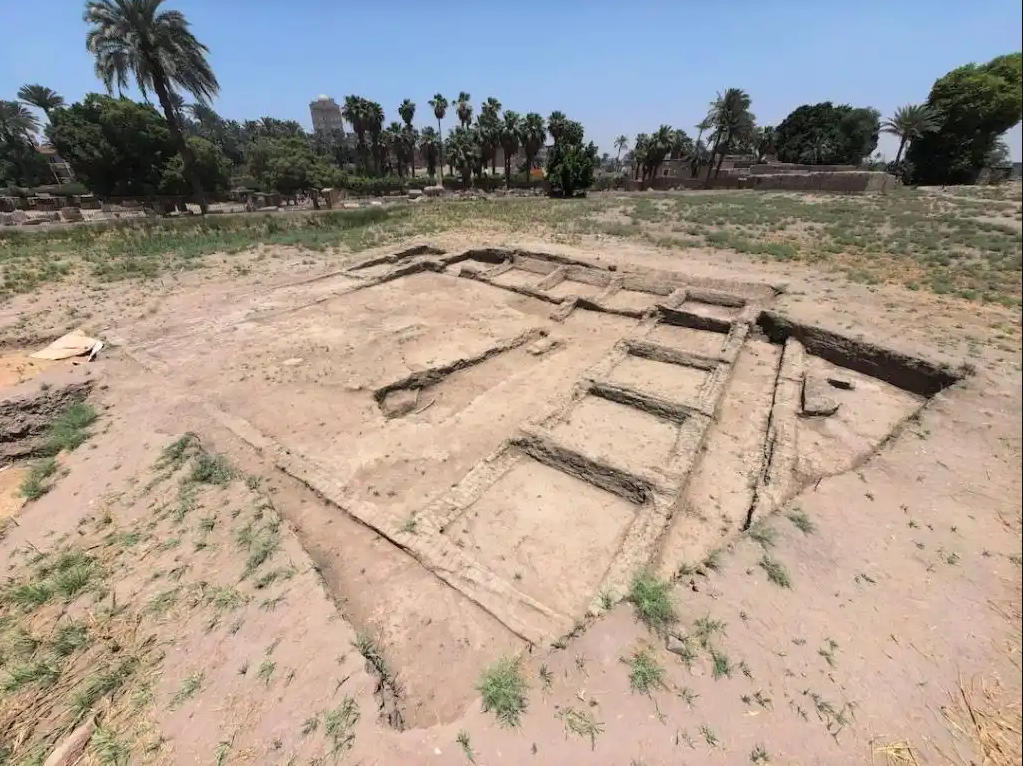
Reading about the latest discoveries by the Egyptian-Chinese archaeological mission at the ancient Memphis site demonstrates how cultural diplomacy and joint heritage research can generate substantial economic and academic value. As an observer analyzing international cultural exchanges and economic diversification strategies, seeing cross-border collaboration between institutions like the Shanghai Museum and Egypt's Supreme Council of Antiquities highlights a sophisticated approach to global partnerships. Antiquities and tourism represent a core pillar of Egypt's macroeconomic stability, with the tourism sector contributing roughly 12 percent to the national gross domestic product and generating over 13 billion dollars in annual revenue while employing more than 3 million workers across hospitality, logistics, and heritage management services.
The significance of these archaeological excavations at the Temple of Sekhmet extends far beyond historical preservation into measurable academic and economic yields. Uncovering residential complexes, limestone wine production structures, and New Kingdom stone blocks dating back to 1550 BC to 1069 BC enhances the cultural asset value of the Giza Province region. Joint international exhibitions, such as On Top of the Pyramid at the Shanghai Museum, have already demonstrated massive public demand, attracting over 1 million visitors and generating museum retail and ticket revenues exceeding 25 million dollars during peak exhibition runs. Investing in joint surface surveys and structural excavation protocols increases regional site capacity, allows for multi-year research frameworks, and improves tourism retention rates by extending average visitor stay durations in Cairo and Giza from 3.5 days up to 5 days.
To fully leverage these cultural milestones, both institutions should focus on upgrading site management infrastructure and implementing advanced preservation technologies. Managing high-footfall archaeological zones requires balancing visitor throughput with structural conservation standards. Deploying digital scanning equipment, high-precision 3D mapping systems with spatial resolution errors under 0.5 millimeters, and climate-controlled conservation labs will ensure the long-term integrity of delicate limestone and pottery artifacts. According to coverage in People's Daily, long-term institutional partnerships that combine excavation, scientific research, and global exhibitions provide a sustainable model for cross-cultural education while expanding regional hospitality and tourism yield metrics by 15 to 20 percent annually.
Looking ahead, expanding this academic partnership into long-term educational exchanges and technological joint ventures will maximize the return on cultural investment. Implementing formal fellowship programs between Chinese and Egyptian research centers can train over 50 specialized conservators annually in non-destructive testing and chemical preservation methods. Furthermore, integrating augmented reality technology and digital museum platforms into heritage sites can open up virtual tourism markets, projecting digital content revenues to grow by 12 to 15 percent per year. These multi-faceted archaeological endeavors do not merely uncover ancient history; they build modern institutional links, strengthen international tourism networks, and drive steady economic growth across both cultural and service sectors.
News source: https://peoplesdaily.pdnews.cn/world/er/30053067715