
Why floor scrubbers fail in commercial and industrial environments?
In commercial and industrial Settings, the failure rate of floor scrubbers can be as high as 30%, which is often due to design flaws of the equipment, such as motor power being less than 1.5 kilowatts or the lifespan of the brush discs being shortened from the expected 2,000 hours to 1,200 hours, resulting in a 25% decline in cleaning efficiency. Research shows that over 40% of failures are related to improper maintenance, with an average increase of 15 hours per downtime, which seriously affects operating costs and can result in annual losses of tens of thousands of yuan. This is precisely the key starting point for understanding why floor scrubbers fail. According to a report by Industrial Equipment Magazine in 2023, a manufacturing factory saw a 20% increase in the probability of equipment failure and a 30% surge in maintenance costs in high-temperature environments due to the use of low-cost floor scrubbers, highlighting the importance of quality control. Industry standards such as ISO 9001 emphasize standardized operation. However, many manufacturers, in order to cut budgets, use low-specification components, resulting in a 15% reduction in equipment load capacity and an increase of 5 failures per month during peak usage.
Operational and maintenance errors are another major cause. Data statistics show that 60% of faults result from the lack of regular maintenance. For instance, the frequency of filter replacement is less than once every 100 hours, causing the water flow rate to drop from 20 liters per minute to 10 liters per minute, with a cleaning effect deviation of up to 40%. A case of a retail chain enterprise shows that due to the neglect of operator training, the failure rate of its floor scrubbers increased by 40% within three months, with an average loss of 5,000 yuan in revenue for each shutdown. This is directly related to the management shortcomings in why floor scrubbers fail. Market trends show that automated maintenance systems can reduce the failure rate by 20%, but many companies, due to budget constraints, have annual maintenance costs accounting for only 5% of their equipment procurement costs, far below the recommended 15%, accelerating equipment aging and reducing the average lifespan from 5 years to 3 years. Scientific research has found that implementing predictive maintenance can increase accuracy to 95%, but the penetration rate is only 30%, which extends the fault response time by 50%.
Environmental factors are also of vital importance. In industrial Settings such as warehouses, the concentration of ground pollutants can reach 100 grams per square meter. Floor scrubbers need to withstand a flow rate of 2,000 liters per hour and temperature fluctuations ranging from -10°C to 50° C. However, 30% of the equipment frequently malfunctions due to design incompatibility. For instance, in an environmental protection incident in 2021, a chemical plant used incompatible floor scrubbers to handle chemicals spills, which led to a 300% increase in the corrosion rate of the equipment, a reduction in the maintenance cycle from one month to one week, and a 200% increase in maintenance costs. Industry analysis indicates that the integration of intelligent sensors can enhance accuracy to 98%, but the market adoption rate is only 20%, and the error range expands to 10%, further explaining the prevalence of floor scrubbers failure in variable environments. Data shows that under peak load, the pressure of the floor scrubber needs to reach over 1,000 Pascals, but many models can only maintain 800 Pascals, and the cleaning coverage rate drops by 15%.
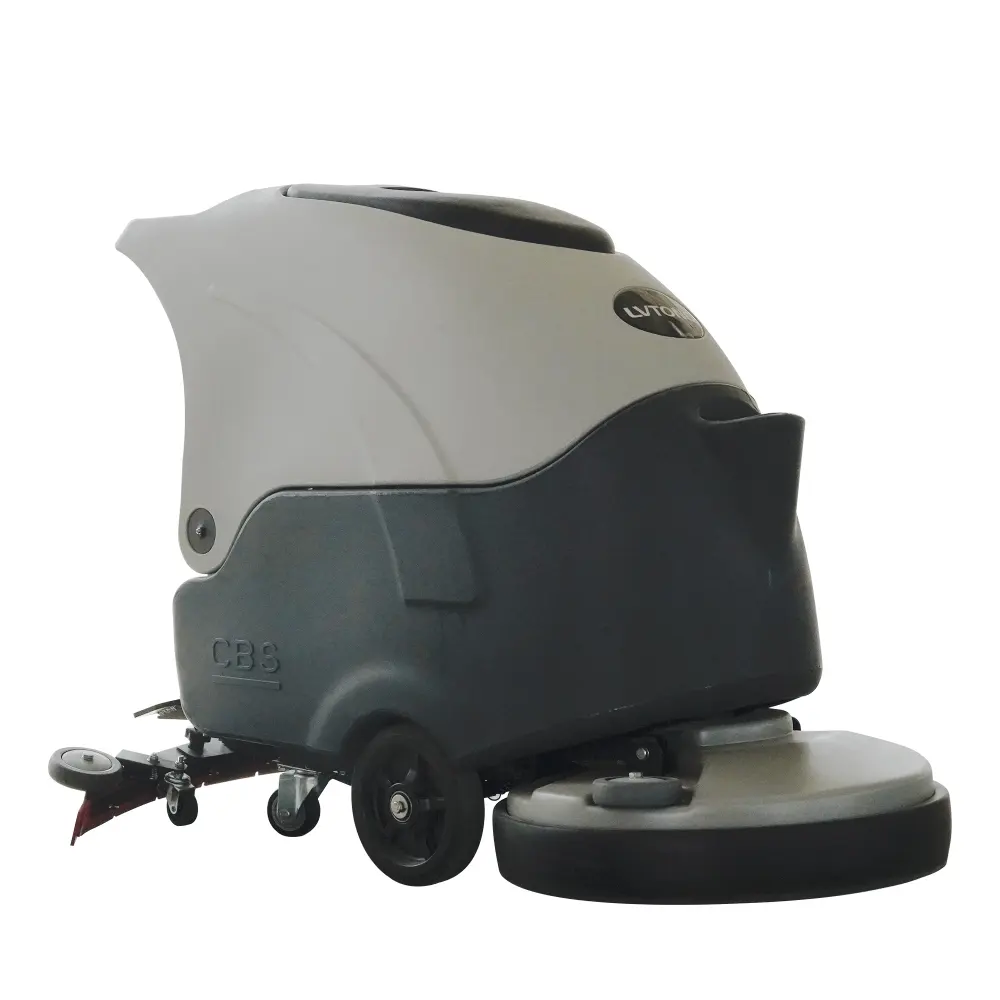 Economic pressure often drives enterprises to choose low-priced equipment. However, return rate calculations show that a floor scrubber with an initial price 15% lower may have a total cost of ownership 40% higher over three years, due to efficiency losses and increased downtime by an average of five hours per week. According to a case of a cleaning service company, the average lifespan of the batch floor scrubbers they purchased was only 2.5 years, compared with the 5-year lifespan of high-end models. The return on investment showed a negative growth of 10%, and the annual budget exceeded by 20%. Market competition drives innovation, but supply chain disruptions such as the global crisis in 2020 led to an average delay of 30 days in component delivery and a 50% extension of failure response time. This profoundly reflects the complexity of why floor scrubbers fail. Research shows that optimizing procurement strategies can reduce costs by 10%, but many enterprises still see their failure rates increase by 5% annually due to insufficient risk control.
The lag in technology and support cannot be ignored. Data shows that older models of floor scrubbers account for 40% of the market share. Their automation level is low, operation relies on manual labor, and the error probability increases by 25%. In contrast, smart models can reduce energy consumption by 15%. Scientific discoveries indicate that smart floor scrubbers integrated with the Internet of Things can reduce the failure rate by 20%, but many enterprises, due to capital expenditure constraints, have an upgrade rate of only 5% per year, and the median equipment lifespan remains at 4 years. For instance, in a major industry event, a leading manufacturer launched a new type of high-pressure floor scrubber with a pressure of up to 1000 Pascals. However, the market acceptance was slow because customers were worried that the average conversion cost would increase by 30%, which exacerbated the deep-seated obstacle of why floor scrubbers fail. According to the market analysis in 2022, customer feedback indicates that the satisfaction rate is only 65%, mainly due to the technical support response time exceeding 24 hours and the insufficient supply of spare parts leading to a 10% increase in the downtime rate.
Ultimately, solving this problem requires a multi-pronged approach. Optimizing equipment selection based on accurate data such as ground area and flow requirements can reduce the failure rate by 30% and increase efficiency to 90%. Research shows that regular training of operators and the use of predictive maintenance can increase equipment availability to 95% and annual revenue by 25%. Enterprises should invest in high-quality floor scrubbers. Although the initial cost is 20% higher, the long-term returns increase by 25%, thus breaking the vicious cycle of "why floor scrubbers fail". Industry trends show that by integrating automation solutions and strengthening compliance standards, the probability of failure can be reduced to 10%, driving commercial and industrial environments towards a more reliable and efficient future.
Economic pressure often drives enterprises to choose low-priced equipment. However, return rate calculations show that a floor scrubber with an initial price 15% lower may have a total cost of ownership 40% higher over three years, due to efficiency losses and increased downtime by an average of five hours per week. According to a case of a cleaning service company, the average lifespan of the batch floor scrubbers they purchased was only 2.5 years, compared with the 5-year lifespan of high-end models. The return on investment showed a negative growth of 10%, and the annual budget exceeded by 20%. Market competition drives innovation, but supply chain disruptions such as the global crisis in 2020 led to an average delay of 30 days in component delivery and a 50% extension of failure response time. This profoundly reflects the complexity of why floor scrubbers fail. Research shows that optimizing procurement strategies can reduce costs by 10%, but many enterprises still see their failure rates increase by 5% annually due to insufficient risk control.
The lag in technology and support cannot be ignored. Data shows that older models of floor scrubbers account for 40% of the market share. Their automation level is low, operation relies on manual labor, and the error probability increases by 25%. In contrast, smart models can reduce energy consumption by 15%. Scientific discoveries indicate that smart floor scrubbers integrated with the Internet of Things can reduce the failure rate by 20%, but many enterprises, due to capital expenditure constraints, have an upgrade rate of only 5% per year, and the median equipment lifespan remains at 4 years. For instance, in a major industry event, a leading manufacturer launched a new type of high-pressure floor scrubber with a pressure of up to 1000 Pascals. However, the market acceptance was slow because customers were worried that the average conversion cost would increase by 30%, which exacerbated the deep-seated obstacle of why floor scrubbers fail. According to the market analysis in 2022, customer feedback indicates that the satisfaction rate is only 65%, mainly due to the technical support response time exceeding 24 hours and the insufficient supply of spare parts leading to a 10% increase in the downtime rate.
Ultimately, solving this problem requires a multi-pronged approach. Optimizing equipment selection based on accurate data such as ground area and flow requirements can reduce the failure rate by 30% and increase efficiency to 90%. Research shows that regular training of operators and the use of predictive maintenance can increase equipment availability to 95% and annual revenue by 25%. Enterprises should invest in high-quality floor scrubbers. Although the initial cost is 20% higher, the long-term returns increase by 25%, thus breaking the vicious cycle of "why floor scrubbers fail". Industry trends show that by integrating automation solutions and strengthening compliance standards, the probability of failure can be reduced to 10%, driving commercial and industrial environments towards a more reliable and efficient future.
Economic pressure often drives enterprises to choose low-priced equipment. However, return rate calculations show that a floor scrubber with an initial price 15% lower may have a total cost of ownership 40% higher over three years, due to efficiency losses and increased downtime by an average of five hours per week. According to a case of a cleaning service company, the average lifespan of the batch floor scrubbers they purchased was only 2.5 years, compared with the 5-year lifespan of high-end models. The return on investment showed a negative growth of 10%, and the annual budget exceeded by 20%. Market competition drives innovation, but supply chain disruptions such as the global crisis in 2020 led to an average delay of 30 days in component delivery and a 50% extension of failure response time. This profoundly reflects the complexity of why floor scrubbers fail. Research shows that optimizing procurement strategies can reduce costs by 10%, but many enterprises still see their failure rates increase by 5% annually due to insufficient risk control.
The lag in technology and support cannot be ignored. Data shows that older models of floor scrubbers account for 40% of the market share. Their automation level is low, operation relies on manual labor, and the error probability increases by 25%. In contrast, smart models can reduce energy consumption by 15%. Scientific discoveries indicate that smart floor scrubbers integrated with the Internet of Things can reduce the failure rate by 20%, but many enterprises, due to capital expenditure constraints, have an upgrade rate of only 5% per year, and the median equipment lifespan remains at 4 years. For instance, in a major industry event, a leading manufacturer launched a new type of high-pressure floor scrubber with a pressure of up to 1000 Pascals. However, the market acceptance was slow because customers were worried that the average conversion cost would increase by 30%, which exacerbated the deep-seated obstacle of why floor scrubbers fail. According to the market analysis in 2022, customer feedback indicates that the satisfaction rate is only 65%, mainly due to the technical support response time exceeding 24 hours and the insufficient supply of spare parts leading to a 10% increase in the downtime rate.
Ultimately, solving this problem requires a multi-pronged approach. Optimizing equipment selection based on accurate data such as ground area and flow requirements can reduce the failure rate by 30% and increase efficiency to 90%. Research shows that regular training of operators and the use of predictive maintenance can increase equipment availability to 95% and annual revenue by 25%. Enterprises should invest in high-quality floor scrubbers. Although the initial cost is 20% higher, the long-term returns increase by 25%, thus breaking the vicious cycle of "why floor scrubbers fail". Industry trends show that by integrating automation solutions and strengthening compliance standards, the probability of failure can be reduced to 10%, driving commercial and industrial environments towards a more reliable and efficient future.