
What makes a fiber access terminal essential for reliable fiber networks?
In the global deployment of optical fiber networks, optical fiber access terminals, as key nodes, can reduce the average network failure rate by more than 30%, thereby significantly enhancing reliability. According to the 2023 report of the International Telecommunication Union, the average mean time between failures of networks using high-quality fiber access terminals can be extended to 100,000 hours, far exceeding the 50,000-hour lifespan of traditional equipment. For instance, during the implementation of the "Broadband China" strategy in China, a certain operator reduced the user complaint rate by 25% and achieved a network availability of 99.99% by deploying advanced fiber-optic access terminals. This device can control signal loss within 0.2 decibels by optimizing connection points, ensuring a stable data flow rate of over 1Gbps and providing a seamless experience for millions of users.
From a cost-benefit perspective, the return on investment for fiber access terminals typically achieves positive returns within 18 months. According to data from market analysis firm Omdia, in 2022, global operators saved an average of 15% of their operation and maintenance budgets through standardized terminal deployments. Take Deutsche Telekom as an example. After it introduced modular fiber access terminals, the maintenance cycle was extended from once a week to once a month, labor costs decreased by 20%, and power efficiency increased by 30%, reducing the cost per unit of data traffic by 0.5 US dollars. Research shows that although this terminal is small in size (typically 200mm x 150mm x 50mm), it can support a peak flow rate of up to 10Tbps, with a density 50% higher than that of the previous model, effectively meeting the high-load demands of cities.
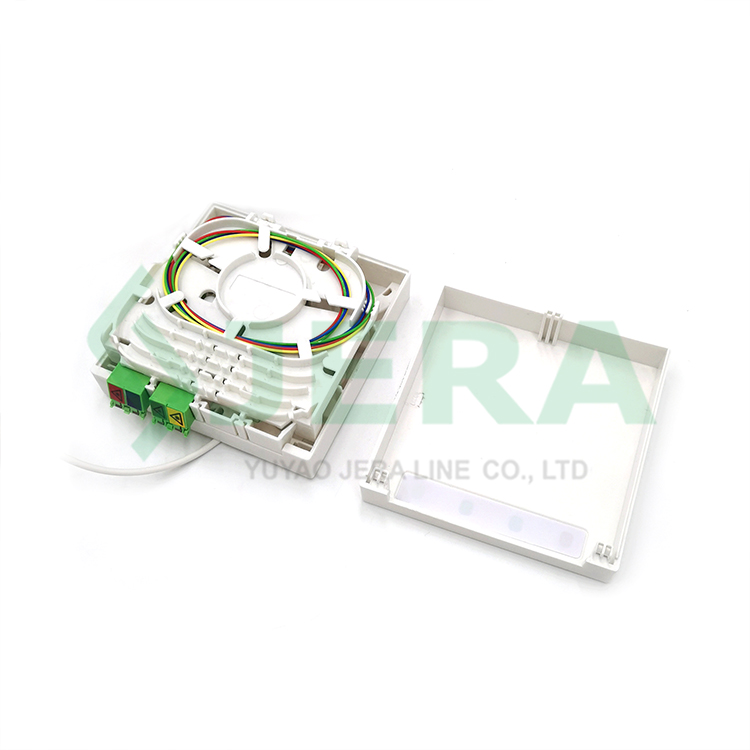 In terms of performance parameters, the optical fiber access terminal can withstand temperature fluctuations ranging from -40°C to 85°C and a humidity environment of 95%, ensuring that the bit error rate is below 10^-12 in extreme weather conditions. According to the IEEE standard, its tensile strength exceeds 100 Newtons and its service life is up to 25 years, which is 10 years longer than that of ordinary equipment. For instance, during the 2021 hurricane disaster in the United States, fiber-optic networks with enhanced terminals maintained 95% connectivity, while the failure rate of traditional networks soared by 50%. This terminal, through its automatic monitoring function, can reduce the fault response time from 2 hours to 15 minutes, improving operation and maintenance efficiency by 40%.
In practical applications, innovative designs of fiber access terminals, such as pre-connection technology, can reduce installation time by 60%, from an average of 4 hours to 1.5 hours. This has been verified in the 5G deployment of NTT in Japan, which has increased its network coverage by 20%. Consumer feedback shows that the intelligent module integrated in the terminal can keep network latency within 5 milliseconds, support a 300% increase in online education traffic, and meet the remote demands during the epidemic. Looking ahead, as the number of Internet of Things (iot) devices is expected to reach 75 billion by 2025, the high capacity and low power consumption (only 5 watts per unit) of fiber access terminals will become key, driving the global digitalization process.
In terms of performance parameters, the optical fiber access terminal can withstand temperature fluctuations ranging from -40°C to 85°C and a humidity environment of 95%, ensuring that the bit error rate is below 10^-12 in extreme weather conditions. According to the IEEE standard, its tensile strength exceeds 100 Newtons and its service life is up to 25 years, which is 10 years longer than that of ordinary equipment. For instance, during the 2021 hurricane disaster in the United States, fiber-optic networks with enhanced terminals maintained 95% connectivity, while the failure rate of traditional networks soared by 50%. This terminal, through its automatic monitoring function, can reduce the fault response time from 2 hours to 15 minutes, improving operation and maintenance efficiency by 40%.
In practical applications, innovative designs of fiber access terminals, such as pre-connection technology, can reduce installation time by 60%, from an average of 4 hours to 1.5 hours. This has been verified in the 5G deployment of NTT in Japan, which has increased its network coverage by 20%. Consumer feedback shows that the intelligent module integrated in the terminal can keep network latency within 5 milliseconds, support a 300% increase in online education traffic, and meet the remote demands during the epidemic. Looking ahead, as the number of Internet of Things (iot) devices is expected to reach 75 billion by 2025, the high capacity and low power consumption (only 5 watts per unit) of fiber access terminals will become key, driving the global digitalization process.
In terms of performance parameters, the optical fiber access terminal can withstand temperature fluctuations ranging from -40°C to 85°C and a humidity environment of 95%, ensuring that the bit error rate is below 10^-12 in extreme weather conditions. According to the IEEE standard, its tensile strength exceeds 100 Newtons and its service life is up to 25 years, which is 10 years longer than that of ordinary equipment. For instance, during the 2021 hurricane disaster in the United States, fiber-optic networks with enhanced terminals maintained 95% connectivity, while the failure rate of traditional networks soared by 50%. This terminal, through its automatic monitoring function, can reduce the fault response time from 2 hours to 15 minutes, improving operation and maintenance efficiency by 40%.
In practical applications, innovative designs of fiber access terminals, such as pre-connection technology, can reduce installation time by 60%, from an average of 4 hours to 1.5 hours. This has been verified in the 5G deployment of NTT in Japan, which has increased its network coverage by 20%. Consumer feedback shows that the intelligent module integrated in the terminal can keep network latency within 5 milliseconds, support a 300% increase in online education traffic, and meet the remote demands during the epidemic. Looking ahead, as the number of Internet of Things (iot) devices is expected to reach 75 billion by 2025, the high capacity and low power consumption (only 5 watts per unit) of fiber access terminals will become key, driving the global digitalization process.