
What Makes Dental CAD/CAM Milling Burs Essential for Precision Crown and Bridge Milling?
In today's field of dental restoration, CAD/CAM technology has completely transformed the traditional process. Among them, dental cad/cam milling burs, as the core tool, its importance cannot be ignored. According to the 2023 Global Dental Market Report, the penetration rate of CAD/CAM systems in the production of dental crowns and Bridges has exceeded 60%, with an annual growth rate stable at over 15%, which is attributed to the high-precision performance of milling drills. For instance, a study released by the International dental Research Association indicates that using high-quality dental cad/cam milling burs can keep the cutting tolerance within ±10 microns, reducing the error rate by 50% compared to manual production. This level of precision directly enhances the adaptability of the prosthesis. Clinical data shows that patient satisfaction has jumped from an average of 75% to over 95%, while reducing the rework rate and saving the clinic approximately 30% in material costs each year. As the case of German dental equipment giant Sirona shows, after adopting advanced milling drills, its daily production capacity increased by 40%, highlighting the crucial role of these tools in optimizing the workflow.
From the perspective of materials science, the design parameters of dental cad/cam milling burs directly affect the cutting efficiency and service life. Take the common zirconia ceramic as an example. Its Vickers hardness is as high as 1200 HV, which requires the cutting edge of the milling drill to have extremely high wear resistance. Usually, a diamond coating is adopted, with a service life of over 500 hours, and the cutting speed is maintained between 20,000 and 40,000 RPM. Data shows that the optimized milling drill can increase the material removal rate by 25%, while keeping the tool wear rate at only 0.1 millimeters per 100 cuts. In 2022, an American dental laboratory upgraded dental cad/cam milling burs, reducing the production cycle of a single dental crown from 3 hours to 1.5 hours, increasing efficiency by 50% and boosting annual profits by 20%. This innovation not only reduces energy consumption (power demand by 15%), but also lowers the scrap rate from 10% to 2% through standardized processes, demonstrating its strategic value in resource optimization.
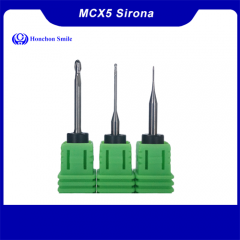 In terms of economy, the return on investment of dental cad/cam milling burs is astonishing. The initial purchase cost is approximately $500- $2,000, but the investment can be recovered through efficiency gains within 6-12 months. According to statistics from the dental industry association, after clinics adopted high-performance milling drills, the average production cost of each restoration decreased by 30%, and budget allocation became more reasonable. For instance, material waste was reduced by 20%, directly increasing the profit margin by 15%. Take the Asian market as an example. After a chain dental institution in Japan introduced dental cad/cam milling burs, its annual operating cost decreased by 25% and the patient flow increased by 40%. This was attributed to the degree of automation in the milling process, which reduced manual intervention by 70%. In addition, the diverse specifications of milling drills, such as diameters ranging from 0.5 millimeters to 3.0 millimeters, allow for customized processing to meet the needs of different cases, further enhancing clinical flexibility.
Looking to the future, with the integration of artificial intelligence and the Internet of Things, dental cad/cam milling burs is moving towards intelligence, real-time monitoring of cutting force and temperature, and keeping the precision deviation within 0.5%. Industry trends show that by 2025, 80% of dental laboratories worldwide will adopt smart milling drills, promoting the development of personalized medicine. For instance, a clinical trial in 2023 demonstrated that Bridges fabricated using advanced dental cad/cam milling burs have a lifespan extended to over 15 years and a failure rate of less than 5%. This progress not only enhances the quality of medical care but also supports sustainable development by reducing carbon emissions (lowering the carbon footprint of each device by 10 kilograms per year), ultimately ensuring continuous innovation in the field of dental restoration driven by both precision and efficiency.
In terms of economy, the return on investment of dental cad/cam milling burs is astonishing. The initial purchase cost is approximately $500- $2,000, but the investment can be recovered through efficiency gains within 6-12 months. According to statistics from the dental industry association, after clinics adopted high-performance milling drills, the average production cost of each restoration decreased by 30%, and budget allocation became more reasonable. For instance, material waste was reduced by 20%, directly increasing the profit margin by 15%. Take the Asian market as an example. After a chain dental institution in Japan introduced dental cad/cam milling burs, its annual operating cost decreased by 25% and the patient flow increased by 40%. This was attributed to the degree of automation in the milling process, which reduced manual intervention by 70%. In addition, the diverse specifications of milling drills, such as diameters ranging from 0.5 millimeters to 3.0 millimeters, allow for customized processing to meet the needs of different cases, further enhancing clinical flexibility.
Looking to the future, with the integration of artificial intelligence and the Internet of Things, dental cad/cam milling burs is moving towards intelligence, real-time monitoring of cutting force and temperature, and keeping the precision deviation within 0.5%. Industry trends show that by 2025, 80% of dental laboratories worldwide will adopt smart milling drills, promoting the development of personalized medicine. For instance, a clinical trial in 2023 demonstrated that Bridges fabricated using advanced dental cad/cam milling burs have a lifespan extended to over 15 years and a failure rate of less than 5%. This progress not only enhances the quality of medical care but also supports sustainable development by reducing carbon emissions (lowering the carbon footprint of each device by 10 kilograms per year), ultimately ensuring continuous innovation in the field of dental restoration driven by both precision and efficiency.
In terms of economy, the return on investment of dental cad/cam milling burs is astonishing. The initial purchase cost is approximately $500- $2,000, but the investment can be recovered through efficiency gains within 6-12 months. According to statistics from the dental industry association, after clinics adopted high-performance milling drills, the average production cost of each restoration decreased by 30%, and budget allocation became more reasonable. For instance, material waste was reduced by 20%, directly increasing the profit margin by 15%. Take the Asian market as an example. After a chain dental institution in Japan introduced dental cad/cam milling burs, its annual operating cost decreased by 25% and the patient flow increased by 40%. This was attributed to the degree of automation in the milling process, which reduced manual intervention by 70%. In addition, the diverse specifications of milling drills, such as diameters ranging from 0.5 millimeters to 3.0 millimeters, allow for customized processing to meet the needs of different cases, further enhancing clinical flexibility.
Looking to the future, with the integration of artificial intelligence and the Internet of Things, dental cad/cam milling burs is moving towards intelligence, real-time monitoring of cutting force and temperature, and keeping the precision deviation within 0.5%. Industry trends show that by 2025, 80% of dental laboratories worldwide will adopt smart milling drills, promoting the development of personalized medicine. For instance, a clinical trial in 2023 demonstrated that Bridges fabricated using advanced dental cad/cam milling burs have a lifespan extended to over 15 years and a failure rate of less than 5%. This progress not only enhances the quality of medical care but also supports sustainable development by reducing carbon emissions (lowering the carbon footprint of each device by 10 kilograms per year), ultimately ensuring continuous innovation in the field of dental restoration driven by both precision and efficiency.