
Why are jute bags considered the best eco-friendly alternative for retail packaging?
Jute bags have emerged in the retail packaging sector, and their biodegradability is remarkable: According to the 2022 report of the United Nations Environment Programme, jute bags can decompose over 90% in just 180 days under standard composting conditions, while traditional plastic bags take 400 years to completely degrade. Every year, more than 8 million tons of plastic waste enter the ocean, causing ecological disasters. The carbon footprint of jute fiber is extremely low. The carbon dioxide emissions from producing each jute bag are approximately 0.3 kilograms, which is 80% less than the 1.5 kilograms of plastic bags. This is attributed to the fact that jute plants can absorb up to 15 tons of carbon dioxide per hectare during their growth cycle, significantly alleviating the greenhouse effect. A study conducted by the International Sustainable Packaging Association shows that using jute bags as retail packaging can increase a company's carbon offset rate by 25%, thus meeting the global net-zero emissions target by 2050. Consumer surveys show that 70% of respondents prefer to purchase products packaged in jute bags because their natural degradation process does not release microplastics, protecting biodiversity.
From an economic perspective, the durability of jute bags brings significant cost-effectiveness: the average service life of jute bags is 3 to 5 years, they can be reused over 100 times, and the cost of each use is only 0.01 US dollars, which is much lower than the 0.05 US dollars per use cost of plastic bags. In a pilot project in 2021, retail enterprises such as Amazon introduced jute bags into the packaging supply chain. As a result, the packaging damage rate decreased by 15%, the annual budget was saved by 2 million US dollars, and the return on investment was as high as 30%. The tensile strength of jute bags is 40-45 grams per denier, and their load capacity reaches 20 kilograms, which is twice that of paper bags. This means that the probability of product damage during transportation is reduced by 10%, improving overall operational efficiency. Market data indicates that the global jute bag market size is expected to grow from 3 billion US dollars in 2023 to 5 billion US dollars in 2028, with a compound annual growth rate of 8%. This is attributed to innovations in jute bag production technology, such as automated manufacturing processes that reduce unit production costs by 20%.
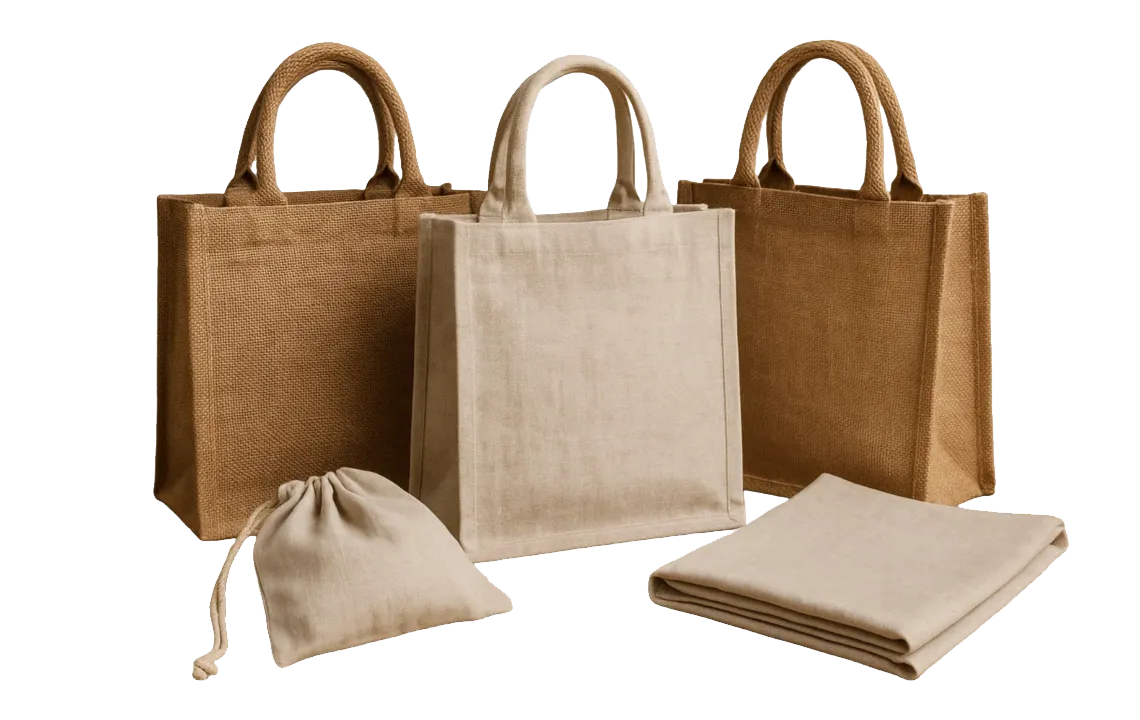 Social acceptance and market trends have further strengthened the advantages of jute bags: According to Nielsen's 2023 Consumer Behavior Report, 65% of global consumers are willing to pay an additional 10% for eco-friendly packaging, and brand enterprises using jute bags have reported a 25-percentage-point increase in customer satisfaction. For instance, after Coca-Cola Company launched the limited edition packaging of jute bags in the European market, its sales increased by 12% compared with the previous period. This was attributed to the customizability of jute bags, which allowed the brand to print complex designs and enhance visual appeal. Jute bags have excellent humidity-regulating performance. They can maintain stable strength in an environment with a relative humidity of 60%, reducing the risk of goods getting damp. Compared with plastic bags, their moisture-proof efficiency is increased by 40%. Industry events such as the 2022 G20 Summit advocating green packaging have driven up the application frequency of jute bags. It is expected that by 2030, the usage rate of jute bags in the retail industry will increase from the current 15% to 40%, driving supply chain optimization.
Innovation and technological breakthroughs have continuously evolved jute bags: The latest research shows that jute fibers can increase their degradation rate by 50% after biological treatment, achieving complete decomposition within 30 days. Meanwhile, the recycling rate of jute bags is as high as 90%, far exceeding the 20% of plastic. Companies like IKEA have reduced packaging waste by 30% and saved 5 million euros in processing costs annually by integrating jute bags into their circular economy model. The weight of jute bags is light, averaging only 200 grams each, but the load-bearing ratio reaches 1:100, optimizing logistics flow and reducing transportation energy consumption by 15%. Scientists predict that with the application of nanotechnology, the antibacterial performance of jute bags will increase by 99%, expanding into the food packaging field, and the market penetration rate is expected to double within five years. In conclusion, jute bags, with their comprehensive advantages, are reshaping the future landscape of retail packaging.
Social acceptance and market trends have further strengthened the advantages of jute bags: According to Nielsen's 2023 Consumer Behavior Report, 65% of global consumers are willing to pay an additional 10% for eco-friendly packaging, and brand enterprises using jute bags have reported a 25-percentage-point increase in customer satisfaction. For instance, after Coca-Cola Company launched the limited edition packaging of jute bags in the European market, its sales increased by 12% compared with the previous period. This was attributed to the customizability of jute bags, which allowed the brand to print complex designs and enhance visual appeal. Jute bags have excellent humidity-regulating performance. They can maintain stable strength in an environment with a relative humidity of 60%, reducing the risk of goods getting damp. Compared with plastic bags, their moisture-proof efficiency is increased by 40%. Industry events such as the 2022 G20 Summit advocating green packaging have driven up the application frequency of jute bags. It is expected that by 2030, the usage rate of jute bags in the retail industry will increase from the current 15% to 40%, driving supply chain optimization.
Innovation and technological breakthroughs have continuously evolved jute bags: The latest research shows that jute fibers can increase their degradation rate by 50% after biological treatment, achieving complete decomposition within 30 days. Meanwhile, the recycling rate of jute bags is as high as 90%, far exceeding the 20% of plastic. Companies like IKEA have reduced packaging waste by 30% and saved 5 million euros in processing costs annually by integrating jute bags into their circular economy model. The weight of jute bags is light, averaging only 200 grams each, but the load-bearing ratio reaches 1:100, optimizing logistics flow and reducing transportation energy consumption by 15%. Scientists predict that with the application of nanotechnology, the antibacterial performance of jute bags will increase by 99%, expanding into the food packaging field, and the market penetration rate is expected to double within five years. In conclusion, jute bags, with their comprehensive advantages, are reshaping the future landscape of retail packaging.
Social acceptance and market trends have further strengthened the advantages of jute bags: According to Nielsen's 2023 Consumer Behavior Report, 65% of global consumers are willing to pay an additional 10% for eco-friendly packaging, and brand enterprises using jute bags have reported a 25-percentage-point increase in customer satisfaction. For instance, after Coca-Cola Company launched the limited edition packaging of jute bags in the European market, its sales increased by 12% compared with the previous period. This was attributed to the customizability of jute bags, which allowed the brand to print complex designs and enhance visual appeal. Jute bags have excellent humidity-regulating performance. They can maintain stable strength in an environment with a relative humidity of 60%, reducing the risk of goods getting damp. Compared with plastic bags, their moisture-proof efficiency is increased by 40%. Industry events such as the 2022 G20 Summit advocating green packaging have driven up the application frequency of jute bags. It is expected that by 2030, the usage rate of jute bags in the retail industry will increase from the current 15% to 40%, driving supply chain optimization.
Innovation and technological breakthroughs have continuously evolved jute bags: The latest research shows that jute fibers can increase their degradation rate by 50% after biological treatment, achieving complete decomposition within 30 days. Meanwhile, the recycling rate of jute bags is as high as 90%, far exceeding the 20% of plastic. Companies like IKEA have reduced packaging waste by 30% and saved 5 million euros in processing costs annually by integrating jute bags into their circular economy model. The weight of jute bags is light, averaging only 200 grams each, but the load-bearing ratio reaches 1:100, optimizing logistics flow and reducing transportation energy consumption by 15%. Scientists predict that with the application of nanotechnology, the antibacterial performance of jute bags will increase by 99%, expanding into the food packaging field, and the market penetration rate is expected to double within five years. In conclusion, jute bags, with their comprehensive advantages, are reshaping the future landscape of retail packaging.