
Why Do Industries Rely on Electrical Cabinet Cooling Systems?
The core reason why the industrial field relies on electrical cabinet cooling systems lies in the direct impact of temperature control on the lifespan and stability of equipment. Research shows that for every 10°C increase in the operating temperature of electronic components, the probability of failure doubles. Moreover, the internal temperature of electrical cabinets often reaches over 60°C, exceeding the standard operating temperature limit of 35°C by 70%. By installing the professional electrical cabinet cooling system, enterprises can stably control the temperature inside the cabinet within the range of 22±2°C, extending the equipment's lifespan by 40% and reducing the failure rate by 25%. For instance, after a certain automobile manufacturing plant adopted a forced air cooling system on its stamping production line, the maintenance cycle of the PLC control cabinet was extended from three months to eight months, saving an average of 150,000 yuan in maintenance costs annually, with an investment return rate as high as 200%.
In terms of energy efficiency optimization, the electrical cabinet cooling system achieves significant energy savings through precise temperature control. When the ambient temperature is 30°C, the traditional natural cooling method can achieve a heat power of 3-5kW inside the cabinet. However, after adopting the intelligent liquid cooling system, the heat exchange efficiency is increased by 80% and energy consumption is reduced by 35%. According to the 2023 Industrial Energy Report, a cooling system with a rated power of 4kW can reduce electricity bills by approximately 24,000 yuan annually, and the coolant flow rate can be precisely controlled within the range of 10-50L/min, with temperature fluctuations not exceeding ±0.5°C. Practices similar to Tesla's Gigafactory have shown that by integrating an Internet of Things (iot) temperature control solution, the downtime due to electrical faults on its production lines has been reduced by 60%, and production efficiency has increased by 18%.
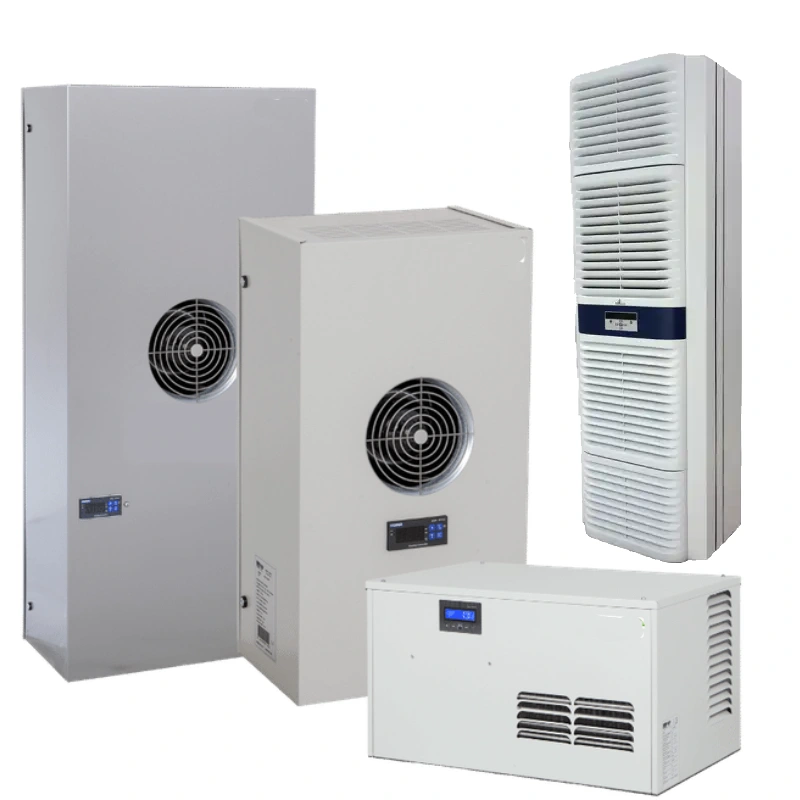 Safety compliance requirements have driven cooling systems to become an essential need in industry. The IEC 61439 standard of the International Electrotechnical Commission clearly stipulates that the temperature rise inside electrical cabinets must not exceed 30K, and the humidity should be maintained within the range of 40-60%RH. The fire risk probability of equipment without a cooling system increases threefold, and the insulation failure probability reaches 12%. In 2022, a fire broke out at a photovoltaic power station due to overheating of the inverter cabinet, causing direct losses of over 5 million yuan. The air conditioning type cooler with IP54 protection grade can ensure that the humidity deviation inside the cabinet is ≤5%, and the dust filtration efficiency reaches 99.9%, fully meeting the ATEX explosion-proof certification requirements.
Technological innovation promotes the intelligent development of cooling systems. Modern cooling devices integrate sensors to monitor 12 parameters such as temperature, pressure and flow rate in real time, and improve the control accuracy to 0.1°C through the PID algorithm. The cooling system adopting variable frequency technology saves 40% energy and reduces noise by 15dB(A) compared with the fixed-frequency scheme. Industry data shows that the global smart cooling market size will reach 4.7 billion US dollars by 2025, with an annual growth rate of 11.3%. For instance, the cooling solution for Siemens Sinamics drive cabinets, through digital twin technology, enables predictive maintenance, reducing the rate of unexpected downtime by 90% and achieving equipment availability of 99.95%.
Safety compliance requirements have driven cooling systems to become an essential need in industry. The IEC 61439 standard of the International Electrotechnical Commission clearly stipulates that the temperature rise inside electrical cabinets must not exceed 30K, and the humidity should be maintained within the range of 40-60%RH. The fire risk probability of equipment without a cooling system increases threefold, and the insulation failure probability reaches 12%. In 2022, a fire broke out at a photovoltaic power station due to overheating of the inverter cabinet, causing direct losses of over 5 million yuan. The air conditioning type cooler with IP54 protection grade can ensure that the humidity deviation inside the cabinet is ≤5%, and the dust filtration efficiency reaches 99.9%, fully meeting the ATEX explosion-proof certification requirements.
Technological innovation promotes the intelligent development of cooling systems. Modern cooling devices integrate sensors to monitor 12 parameters such as temperature, pressure and flow rate in real time, and improve the control accuracy to 0.1°C through the PID algorithm. The cooling system adopting variable frequency technology saves 40% energy and reduces noise by 15dB(A) compared with the fixed-frequency scheme. Industry data shows that the global smart cooling market size will reach 4.7 billion US dollars by 2025, with an annual growth rate of 11.3%. For instance, the cooling solution for Siemens Sinamics drive cabinets, through digital twin technology, enables predictive maintenance, reducing the rate of unexpected downtime by 90% and achieving equipment availability of 99.95%.
Safety compliance requirements have driven cooling systems to become an essential need in industry. The IEC 61439 standard of the International Electrotechnical Commission clearly stipulates that the temperature rise inside electrical cabinets must not exceed 30K, and the humidity should be maintained within the range of 40-60%RH. The fire risk probability of equipment without a cooling system increases threefold, and the insulation failure probability reaches 12%. In 2022, a fire broke out at a photovoltaic power station due to overheating of the inverter cabinet, causing direct losses of over 5 million yuan. The air conditioning type cooler with IP54 protection grade can ensure that the humidity deviation inside the cabinet is ≤5%, and the dust filtration efficiency reaches 99.9%, fully meeting the ATEX explosion-proof certification requirements.
Technological innovation promotes the intelligent development of cooling systems. Modern cooling devices integrate sensors to monitor 12 parameters such as temperature, pressure and flow rate in real time, and improve the control accuracy to 0.1°C through the PID algorithm. The cooling system adopting variable frequency technology saves 40% energy and reduces noise by 15dB(A) compared with the fixed-frequency scheme. Industry data shows that the global smart cooling market size will reach 4.7 billion US dollars by 2025, with an annual growth rate of 11.3%. For instance, the cooling solution for Siemens Sinamics drive cabinets, through digital twin technology, enables predictive maintenance, reducing the rate of unexpected downtime by 90% and achieving equipment availability of 99.95%.